How to Track Mentions Across the Web: A Complete Guide for Individuals and Businesses
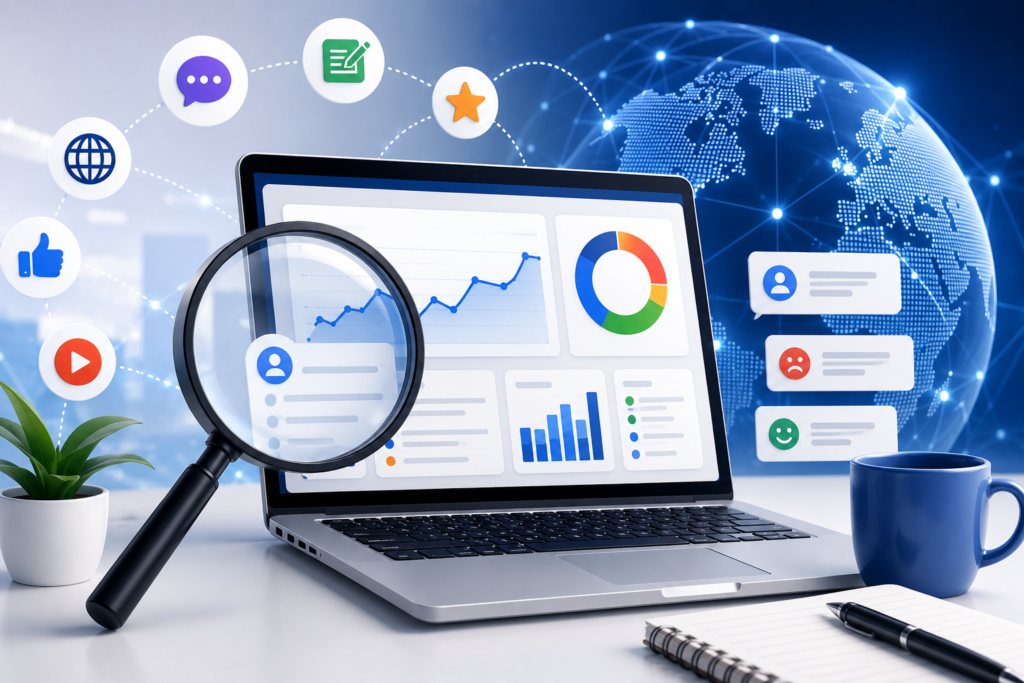
People are constantly talking about brands, businesses, professionals, and public figures online. Whether it’s a customer review, a social media comment, a news article, a blog post, or a forum discussion, these mentions collectively shape your online reputation.
The challenge is that many of these conversations happen without directly notifying you. By the time you discover a negative review, damaging article, or viral discussion, it may have already influenced potential customers, employers, investors, or business partners.
This is why web mention tracking has become an essential part of reputation management. Monitoring mentions across the internet allows you to identify opportunities, respond to concerns, manage crises, and protect your digital presence before issues escalate.
In this guide, we’ll explore how to track mentions across the web, which tools to use, what to monitor, and how businesses and individuals can build an effective monitoring strategy. (Check out our service : Monitor Reputation , Build Reputation)
What Are Web Mentions?
A web mention is any instance where your name, brand, company, product, executive, or other identifiable term appears online.
Mentions can appear on:
- News websites
- Blogs
- Social media platforms
- Review websites
- Discussion forums
- Podcasts
- Video descriptions
- Press releases
- Online directories
- Community websites
Examples include:
- A customer reviewing your business.
- A journalist mentioning your company in an article.
- Someone discussing your product on Reddit.
- A blogger comparing your service to competitors.
- A YouTube creator referencing your brand.
Not all mentions are tagged or linked directly to your website, making manual tracking difficult.
Why Tracking Mentions Matters
Many businesses focus solely on website analytics while ignoring conversations happening elsewhere online.
Mention tracking helps you:
Protect Your Reputation
Negative content can spread rapidly online. Early detection allows you to respond before it gains traction.
Identify Customer Feedback
Customers often share honest opinions publicly before contacting support.
Discover Media Opportunities
Journalists frequently mention companies while researching stories.
Monitoring mentions helps identify opportunities for interviews, partnerships, and media outreach.
Measure Brand Awareness
The volume and quality of mentions provide valuable insight into brand visibility.
Monitor Competitors
Tracking competitor mentions reveals customer sentiment, market trends, and industry opportunities.
Improve SEO Performance
Brand mentions often lead to backlinks, citations, and increased search visibility.
Types of Mentions You Should Monitor
Many organizations only track their company name, but a comprehensive strategy should include several categories.
Brand Name
Monitor:
- Company name
- Brand variations
- Common misspellings
- Abbreviations
Example:
- Online Reputation Bureau
- ORB
- Online Reputation Bureau LLC
Personal Names
For executives, founders, and public figures:
Monitor:
- Full name
- Nicknames
- Common variations
This is especially important for entrepreneurs and business owners whose personal reputation impacts company trust.
Products and Services
Track mentions of:
- Product names
- Service names
- New launches
- Premium offerings
Customers often discuss products without mentioning the company itself.
Competitor Mentions
Understanding competitor discussions can reveal:
- Customer frustrations
- Industry trends
- Market opportunities
- Potential prospects
Industry Keywords
Monitor broader industry topics related to your business.
For example:
- Online reputation management
- Brand protection
- Digital privacy
- Content removal
- Review management
This helps uncover conversations where your expertise can add value.
Free Ways to Track Mentions
Not every business needs expensive monitoring software.
Several free solutions can provide valuable visibility.
Google Alerts
Google Alerts remains one of the easiest ways to monitor web mentions.
You can create alerts for:
- Brand names
- Personal names
- Product names
- Industry terms
Whenever Google indexes new content matching your keywords, you’ll receive a notification.
Best practices:
- Use quotation marks for exact matches.
- Create separate alerts for each keyword.
- Monitor executive names separately.
Example:
“Online Reputation Bureau”
instead of:
Online Reputation Bureau
Manual Search Monitoring
Regularly search for:
- Your company name
- Your personal name
- Product names
Use search operators such as:
- “Your Brand”
- “Your Name”
- “Your Product”
Review results periodically to identify new mentions.
Social Media Searches
Many conversations happen directly on social platforms.
Search regularly on:
Look for:
- Brand mentions
- Hashtags
- Product discussions
- Industry conversations
Advanced Mention Tracking Tools
As monitoring needs grow, dedicated tools become valuable.
Google Alerts
Ideal for:
- Individuals
- Small businesses
- Basic monitoring
Advantages:
- Free
- Easy setup
- Covers indexed web content
Limitations:
- Not real-time
- Limited social coverage
Mention
Tracks:
- News
- Blogs
- Forums
- Social media
Useful for businesses requiring broader monitoring coverage.
Brand24
Popular among marketers and reputation professionals.
Features include:
- Sentiment analysis
- Real-time alerts
- Social listening
- Trend analysis
BuzzSumo
Excellent for:
- Content monitoring
- Media tracking
- Influencer discovery
Useful for identifying high-authority mentions.
Meltwater
Enterprise-level monitoring platform.
Tracks:
- News media
- Broadcast media
- Social media
- Industry trends
Often used by larger organizations and PR teams.
Monitoring Social Media Mentions Effectively
Social media conversations move much faster than traditional web content.
A mention can go viral within hours.
To improve monitoring:
Track Branded Hashtags
Examples:
- #YourBrand
- #YourCompany
Hashtag monitoring often uncovers discussions before they appear in search results.
Monitor Direct and Indirect Mentions
Many users discuss brands without tagging official accounts.
These untagged mentions frequently contain the most honest feedback.
Watch Viral Conversations
If a post mentioning your brand begins gaining engagement:
- Investigate immediately.
- Assess sentiment.
- Respond appropriately if necessary.
Early intervention can prevent larger reputation issues.
Tracking News Mentions
News coverage has a significant impact on online reputation.
Monitor:
- Company names
- Executive names
- Product launches
- Industry keywords
Set up separate alerts specifically for media monitoring.
This helps identify:
- Positive press
- Negative coverage
- Emerging issues
- Interview opportunities
Monitoring Review Websites
Review platforms often influence purchasing decisions more than company websites.
Track reviews on:
- Google Business Profile
- Trustpilot
- Yelp
- Industry-specific review sites
Responding quickly to reviews demonstrates professionalism and customer care.
Tracking Mentions on Forums and Communities
Many reputation issues originate in online communities.
Important platforms include:
These discussions often rank highly in search results.
Monitoring them allows organizations to understand public sentiment before issues become widespread.
Creating a Mention Monitoring Workflow
Tracking mentions is only valuable if you have a process for handling them.
Step 1: Categorize Mentions
Separate mentions into:
- Positive
- Neutral
- Negative
This helps prioritize responses.
Step 2: Assess Impact
Evaluate:
- Source authority
- Audience size
- Search visibility
- Potential business impact
Not every mention requires action.
Step 3: Respond Strategically
Positive mentions:
- Thank the author.
- Share the content.
Negative mentions:
- Investigate facts.
- Respond professionally.
- Offer solutions where appropriate.
Step 4: Escalate Serious Issues
For potentially damaging content:
- Notify relevant stakeholders.
- Engage legal or PR teams when necessary.
- Develop a response plan.
Step 5: Measure Trends
Look beyond individual mentions.
Track:
- Mention volume
- Sentiment changes
- Top sources
- Emerging topics
Trend analysis provides valuable long-term insights.
Common Mistakes to Avoid
Many organizations make monitoring less effective by:
Tracking Too Few Keywords
Only monitoring a company name leaves significant gaps.
Monitor:
- Names
- Products
- Executives
- Competitors
- Industry terms
Ignoring Small Mentions
Minor discussions can become major reputation challenges if left unchecked.
Monitoring Only Social Media
Conversations also occur on:
- News sites
- Blogs
- Forums
- Review platforms
A complete strategy covers all channels.
Failing to Act
Monitoring alone does not protect reputation.
Organizations must have clear response procedures.
The Future of Web Mention Tracking
As online content continues expanding, mention tracking is becoming increasingly sophisticated.
Modern tools now offer:
- AI-powered sentiment analysis
- Real-time monitoring
- Trend prediction
- Crisis detection
- Automated reporting
Businesses that invest in proactive monitoring gain a significant advantage in managing public perception and protecting their digital presence.
Final Thoughts
Your online reputation is shaped by conversations happening across countless websites, platforms, and communities. Many of these discussions occur without your knowledge, making proactive monitoring essential.
By tracking mentions across news sites, social media, forums, review platforms, and search engines, individuals and businesses can identify opportunities, respond to concerns quickly, and maintain greater control over their digital presence.
Whether you’re a growing business, a public figure, an executive, or a private individual, web mention monitoring is no longer optional—it’s a critical component of modern reputation management.
The organizations that consistently track, analyze, and respond to online mentions are often the ones that build stronger trust, protect their reputation, and stay ahead of potential challenges.